Ingredient profile
Quercetin in SynoCell
SynoCell lists 310 mg of quercetin per 2 capsules. Quercetin is a plant pigment sold as an antioxidant, but it has no human osteoarthritis trials; the joint data are from animals and lab dishes. It is usually mild at supplement doses, yet it can interact with warfarin, cyclosporine, some antibiotics and blood pressure drugs.
Written by the SynoCell editorial teamUpdated
What is quercetin?
Quercetin is a flavonoid, a yellow pigment that plants make. You already eat small amounts in everyday foods such as onions, apples and tea.
As a supplement, it is sold in isolated form at much higher amounts than any diet provides (Andres et al., 2018). It is marketed as an antioxidant. On the SynoCell label it is the second ingredient, at 310 mg per serving, the same weight as the ASU.
How much quercetin is in SynoCell?
Each 2-capsule serving lists 310 mg. That is a moderate amount for a quercetin supplement. It is well under the 1,000 mg a day that standalone products often provide (Andres et al., 2018).
| Label name | Quercetin |
|---|---|
| What it is | Plant flavonoid |
| Form | Plant pigment (flavonoid) |
| Amount per 2 capsules | 310 mg |
| Amount used in research | Up to 1,000 mg a day in general studies; no human arthritis trials |
| Strength of evidence | No human joint trials |
| Why it is in the formula | Sold as an antioxidant; joint data are animal and lab only |
| Main caution | Can interact with several drugs, including warfarin, cyclosporine and some antibiotics. |
Does quercetin help arthritis?
There is no human evidence that it does. Memorial Sloan Kettering's herb database cites only animal and lab studies for osteoarthritis, with no human trials (MSKCC, Quercetin).
Lab and animal results are a starting point for research, not proof. The Federal Trade Commission says health claims generally need randomized human trials, and that animal and lab work is not enough on its own (FTC, Health Products Compliance Guidance).
The brand store says quercetin helps "regrow strong, new bones." No human study shows that quercetin builds bone or cartilage. Treat the line as marketing.
Where does quercetin rank among joint options?
At the bottom of the ladder. Exercise, weight loss and NSAIDs sit at the top. ASU and Boswellia have small human trials. Quercetin has none for joints.
Exercise
StrongStrongly recommended by the American College of Rheumatology for knee, hip and hand osteoarthritis. (ACR, 2026 OA guideline summary) (Kolasinski et al., 2020 (ACR/AF 2019 guideline))
Weight loss (if overweight)
StrongEach pound lost takes about four pounds of load off the knee; strongly recommended for knee and hip OA. (Messier et al., 2005) (ACR, 2026 OA guideline summary)
Topical or oral NSAIDs
StrongStrongly recommended, with heart, stomach and kidney risks to discuss with a doctor. (ACR, 2026 OA guideline summary) (FDA, 2015 NSAID safety communication)
Avocado/soybean unsaponifiables
SmallFour trials: pain about 8.5 points lower on a 0-100 scale, a benefit of questionable importance. (Cameron and Chrubasik, 2014)
Boswellia extracts
Small trialsSeven small trials, 545 patients, mostly positive; different extracts from SynoCell's. (Yu et al., 2020)
Oral hyaluronic acid
MixedSmall studies; one 12-month trial helped only people aged 70 or younger. (Tashiro et al., 2012) (Guadagna et al., 2018)
Glucosamine and chondroitin
Advised againstThe 2026 ACR guideline strongly recommends against them for knee, hip and hand OA. (ACR, 2026 OA guideline summary)
Quercetin for joints
No human trialsOnly animal and lab data for osteoarthritis. (MSKCC, Quercetin)
Bar length shows how much published evidence supports each option for osteoarthritis pain and function, based on the guideline and reviews linked here. A reading aid, not a score from any one source.
How much quercetin is safe to take?
Short-term use at supplement doses appears safe for most adults. It has been used at 500 mg twice a day for 12 weeks (RxList, Quercetin), and adverse effects in human studies were rare and mild (Andres et al., 2018).
| Amount | Where it comes from | Source |
|---|---|---|
| 310 mg a day | SynoCell, 2 capsules | (SynoCell, product page) |
| 500 mg twice a day | Used for up to 12 weeks | (RxList, Quercetin) |
| Up to 1,000 mg a day | Common in isolated supplements; no adequate safety data past 12 weeks at this level | (Andres et al., 2018) |
SynoCell's amount is below those levels. Even so, long-term data are thin, so it makes sense to review your use with a clinician every few months.
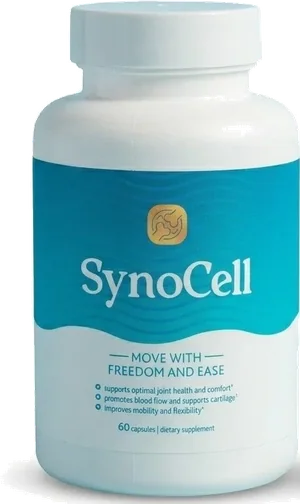
Try SynoCell with a 90-day window2 capsules a day · from $39 a bottle · free standard U.S. shipping
Order nowCan quercetin hurt your kidneys?
At very high doses, possibly. Kidney damage has been reported with large intravenous doses, and very high oral doses might cause it too (RxList, Quercetin). Animal data suggest quercetin may worsen kidney damage that already exists (Andres et al., 2018).
If you have chronic kidney disease or reduced kidney function, ask your doctor before taking SynoCell or any quercetin product.
For the full list of cautions, see SynoCell side effects and interactions.
Which medicines interact with quercetin?
Several. Quercetin can slow liver enzymes and a gut pump that clear many drugs, so it may raise their levels. One case report describes a raised INR, a sign of thinner blood, in a man on warfarin (MSKCC, Quercetin).
- Drugs cleared by CYP3A4 or CYP2C19 (MSKCC, Quercetin)
- Losartan, a blood pressure drug (MSKCC, Quercetin)
- Warfarin (MSKCC, Quercetin)
- Quinolone antibiotics, cyclosporine, blood pressure medicines and P-glycoprotein substrates (RxList, Quercetin)
| If you take | Ingredient to ask about | Why |
|---|---|---|
| Blood thinners (warfarin and others) | Quercetin, Boswellia | A raised INR was reported with quercetin; Boswellia may add to bleeding risk. (MSKCC, Quercetin) (MSKCC, Boswellia) |
| Cyclosporine, some antibiotics (quinolones) | Quercetin | Listed moderate interactions. (RxList, Quercetin) |
| Seizure drugs (phenytoin, carbamazepine) | Black pepper extract | Piperine raised blood levels in small studies. (Horn and Hansten, 2017) (Ziegenhagen et al., 2021) |
| Heart and blood pressure drugs (propranolol, losartan) | Black pepper, quercetin | Piperine raised propranolol levels; quercetin may interact with losartan. (Ziegenhagen et al., 2021) (MSKCC, Quercetin) |
| Drugs cleared by liver CYP3A4 or CYP2C19 | Quercetin, black pepper | Both can slow how some drugs are broken down. (MSKCC, Quercetin) (Horn and Hansten, 2017) |
| NSAID pain relievers | None known | No listed interaction, but tell your doctor about every supplement you take. (NIH ODS, Dietary Supplements: What You Need to Know) |
SynoCell also contains black pepper extract, which slows some of the same pathways. Bring the bottle to your pharmacist so they can check both together.
Why is quercetin in SynoCell, then?
The brand does not explain its choice. Quercetin is common in joint formulas, often sold on antioxidant appeal. Popularity is not evidence.
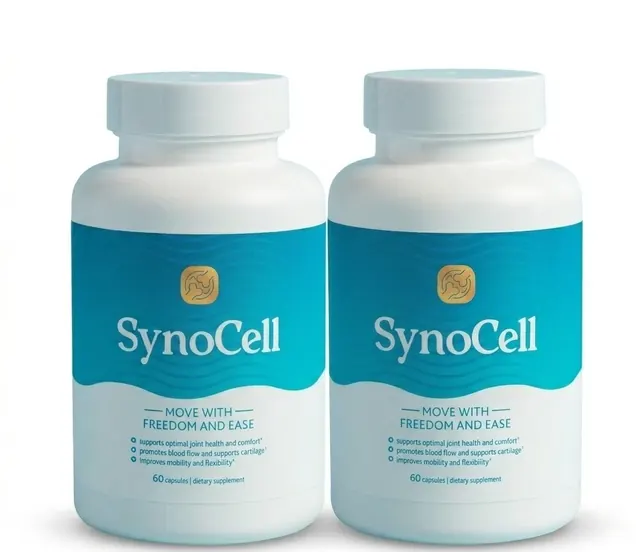
If you already take a separate quercetin product, adding SynoCell stacks the dose. Check the total on both labels. More on reading labels is in our guide to joint supplements.
What are the other SynoCell ingredients?
Quercetin is one of five. Jump to another profile, or see all of them on the ingredients page.
FAQ
Questions about quercetin
Can quercetin help arthritis?
There is no human evidence that it does. Osteoarthritis data for quercetin come only from animal and lab studies, with no human trials. That is not enough to support a joint health claim. SynoCell includes 310 mg, but its joint value in people is unknown.
Is 310 mg of quercetin a lot?
It is a moderate amount. Isolated quercetin supplements often provide up to 1,000 mg a day, and 500 mg twice daily has been used for 12 weeks. SynoCell's 310 mg is below those levels, though far above what a normal diet supplies.
Does quercetin interact with blood thinners?
It may. A man taking warfarin had a raised INR after using quercetin, and warfarin is listed among its moderate interactions. If you take any blood thinner, ask your doctor or pharmacist before starting SynoCell, and keep up with your usual blood tests.
Is quercetin bad for your kidneys?
Not at usual supplement doses in healthy people, as far as studies show. Very high doses might cause kidney damage, and animal data suggest it may worsen existing kidney problems. People with kidney disease should check with their doctor first.
Can I take quercetin with blood pressure medicine?
Ask your pharmacist first. Quercetin is listed as a moderate interaction with blood pressure medicines and may interact with losartan specifically. Your pharmacist can check whether your exact medicine is affected.
Does SynoCell's quercetin help bones grow?
No study in people shows that. The brand store says quercetin helps regrow strong, new bones, but that is the seller's claim. Joint and bone data for quercetin come from animals and lab dishes, which do not prove an effect in humans.
Who wrote this
Written and reviewed by
Plain-language pages built from the label, the brand store and linked medical sources.
Last updated . Read our editorial standards and how we check reviews. This website is run by an authorized U.S. retailer, not by the manufacturer. We earn money when you buy through our order links.
Keep reading
More about SynoCell
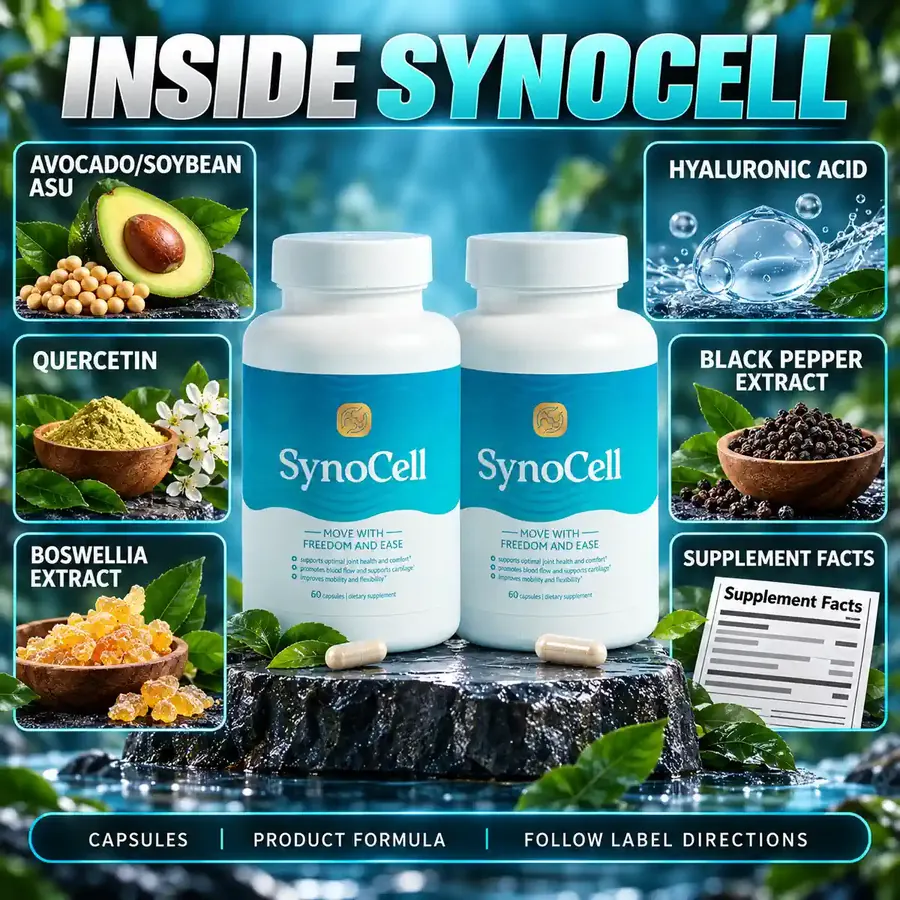
Black pepper extract
5 mg of piperine: why it is added, which medicines it can affect, and how it compares with safety limits.
Read moreSide effects
Side effects of each SynoCell ingredient, which medicines to check, warning signs and how to report a problem.
Read moreWho it's for
A quick fit check: who may suit SynoCell, who should skip it, and who should ask a doctor first.
Read moreUSA authorized SynoCell retailer
Ready to try SynoCell?
Pick a pack. Two capsules a day, and the 90-day money-back policy gives you three months to decide.
- Secure checkout
- 90-day money-back policy
- Ships from the U.S. with tracking