Ingredient 5 of 5
Black pepper extract in SynoCell: a 5 mg absorption aid with a medicine catch
SynoCell lists 5 mg of black pepper extract (BioPerine) per serving. Its active compound, piperine, is added to help other ingredients absorb. It is not a joint ingredient. At 15 to 20 mg a day, piperine raised blood levels of several medicines in small studies. No one has tested what 5 mg does to yours.
Written by the SynoCell editorial teamUpdated
Why is black pepper extract in a joint supplement?
It is there to help the other ingredients get into your bloodstream. Black pepper extract is standardized for piperine, the compound that gives pepper its bite.
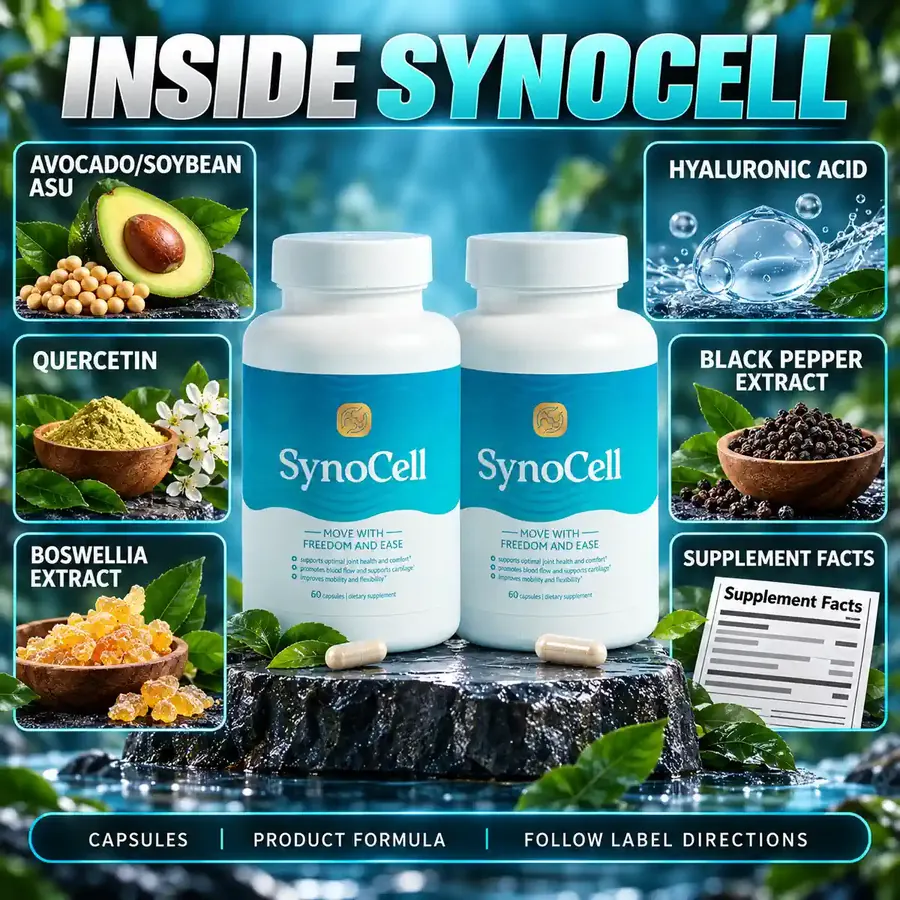
The label calls it "Black Pepper (fruit) Extract (BioPerine)," 5 mg per 2-capsule serving (SynoCell, product page). BioPerine is a branded piperine extract. Nobody sells piperine as a joint treatment, and SynoCell does not claim it is one.
| Label name | Black Pepper (fruit) Extract (BioPerine) |
|---|---|
| What it is | Piper nigrum fruit, standardized for piperine |
| Form | Absorption enhancer |
| Amount per 2 capsules | 5 mg |
| Amount used in research | 5-30 mg a day in supplements; 15-20 mg in drug-interaction studies |
| Strength of evidence | Absorption aid, not a joint ingredient |
| Why it is in the formula | Added to help other ingredients absorb |
| Main caution | Piperine can raise blood levels of some medicines. Tell your doctor or pharmacist. |
How does piperine help absorption?
Piperine slows some of the systems your gut and liver use to clear substances from the body. Less clearing means more of a compound stays in your blood for longer (Horn and Hansten, 2017).
The best-known study paired 20 mg of piperine with 2 g of curcumin in healthy volunteers. Curcumin absorption rose by about 2000%, with no side effects reported at those doses (Shoba et al., 1998). That single result is why piperine shows up in so many supplements.
The catch for SynoCell
SynoCell contains no curcumin. We found no study showing that piperine raises absorption of ASU, quercetin, Boswellia or hyaluronic acid. The boost is a reasonable guess for this formula, not a measured fact.
Can piperine change how your medicines work?
Yes, at higher doses it can. The same effect that helps a supplement absorb can also raise the level of a prescription drug. In small human studies, about 15 to 20 mg of piperine a day did the following (Horn and Hansten, 2017):
- Raised carbamazepine (a seizure drug) exposure by 48%.
- Raised fexofenadine (an allergy drug) exposure by 68%, and also raised diclofenac.
- Made the sedative midazolam last longer.
- Modestly raised phenytoin, with early signs for propranolol and theophylline.
A safety review from Germany's risk agency put the range at about 1.1 to 2.7 times normal exposure, at 20 mg a day (Ziegenhagen et al., 2021). Drugs with a narrow safe range, like seizure medicines, are the main worry. Quercetin, also in SynoCell, has its own interaction list. The table below shows which ingredient raises which question.
| If you take | Ingredient to ask about | Why |
|---|---|---|
| Blood thinners (warfarin and others) | Quercetin, Boswellia | A raised INR was reported with quercetin; Boswellia may add to bleeding risk. (MSKCC, Quercetin) (MSKCC, Boswellia) |
| Cyclosporine, some antibiotics (quinolones) | Quercetin | Listed moderate interactions. (RxList, Quercetin) |
| Seizure drugs (phenytoin, carbamazepine) | Black pepper extract | Piperine raised blood levels in small studies. (Horn and Hansten, 2017) (Ziegenhagen et al., 2021) |
| Heart and blood pressure drugs (propranolol, losartan) | Black pepper, quercetin | Piperine raised propranolol levels; quercetin may interact with losartan. (Ziegenhagen et al., 2021) (MSKCC, Quercetin) |
| Drugs cleared by liver CYP3A4 or CYP2C19 | Quercetin, black pepper | Both can slow how some drugs are broken down. (MSKCC, Quercetin) (Horn and Hansten, 2017) |
| NSAID pain relievers | None known | No listed interaction, but tell your doctor about every supplement you take. (NIH ODS, Dietary Supplements: What You Need to Know) |
Is 5 mg of piperine above any safety limit?
It is above one cautious guidance value and below two national limits. Human safety data on isolated piperine are thin, so agencies landed in different places (Ziegenhagen et al., 2021).
| Reference point | Piperine a day | What it means |
|---|---|---|
| BfR guidance value (Germany) | About 2.3 mg | A cautious estimate; SynoCell's amount is above it (Ziegenhagen et al., 2021) |
| SynoCell, 2 capsules | 5 mg | Printed on the brand's Supplement Facts (SynoCell, product page) |
| Australia limit | 10 mg | SynoCell is under it (Ziegenhagen et al., 2021) |
| Health Canada limit | 14 mg | SynoCell is under it (Ziegenhagen et al., 2021) |
| Drug-interaction studies | 15-20 mg | Medicine levels rose (Horn and Hansten, 2017) |
| Typical supplements | 5-30 mg | SynoCell is at the low end (Ziegenhagen et al., 2021) |
The fair reading: 5 mg is a modest amount by supplement standards. It is still more than the most careful guidance suggests, which is a good reason not to double the serving.
Does 5 mg change your medicine levels?
Nobody knows. The drug studies used three to four times more piperine than SynoCell provides, and no one has tested 5 mg against a given prescription. That uncertainty cuts both ways. Ask your pharmacist, who can look at your exact medicines and doses.

Try SynoCell with a 90-day window2 capsules a day · from $39 a bottle · free standard U.S. shipping
Order nowShould you avoid piperine during pregnancy?
Yes. The German safety review advises pregnant women to avoid isolated piperine (Ziegenhagen et al., 2021). Pepper on food is a different matter; the concern is a concentrated extract taken every day.
Pregnant or breastfeeding? Skip SynoCell. Besides piperine, its ASU has no reliable safety data in pregnancy or breastfeeding (WebMD, Avocado soy unsaponifiables).
Other groups worth a talk with a clinician first: people on several daily prescriptions, people with kidney disease, and anyone with a soy allergy. The who it's for page walks through each one.

What should you ask your pharmacist?
Bring the label and ask three short questions. It takes a few minutes and costs nothing.
Show the full list
Read out all five ingredients and amounts, including 5 mg of piperine and 310 mg of quercetin. The Supplement Facts page has them typed out.
Name every medicine
Include over-the-counter pills, allergy tablets and sleep aids, not just prescriptions.
Ask about timing and checks
Ask whether to space doses apart, or whether a blood level or INR check makes sense after you start.
How does black pepper extract fit with the other ingredients?
It is the helper, not the headliner. ASU and hyaluronic acid sit near trial doses, Boswellia adds small trials of other extracts, and quercetin has none in people with arthritis. Compare all five on the ingredients overview.
FAQ
Black pepper extract questions
Why is black pepper in supplements?
Black pepper extract supplies piperine, which slows how the body clears some compounds. In one study, 20 mg of piperine raised curcumin absorption by about 2000%. Makers add it hoping for a similar boost, though it has not been measured for SynoCell's ingredients. (Shoba et al., 1998)
What is BioPerine?
BioPerine is a branded black pepper fruit extract standardized for piperine. SynoCell lists 5 mg of it per 2-capsule serving. It is added as an absorption aid, not as a treatment for joints, and it can affect how some medicines are processed. (SynoCell, product page) (Horn and Hansten, 2017)
Does piperine interact with medications?
It can. At about 15 to 20 mg a day, piperine raised blood levels of carbamazepine, phenytoin, diclofenac, fexofenadine and propranolol, and prolonged midazolam sedation. SynoCell has 5 mg, and that amount has not been tested. Ask your pharmacist before you start. (Horn and Hansten, 2017) (Ziegenhagen et al., 2021)
How much piperine is safe per day?
No single number is agreed. Germany's risk agency derived a cautious guidance value of about 2.3 mg a day. Australia allows up to 10 mg and Health Canada 14 mg. SynoCell's 5 mg sits between them, so stick to the labeled serving. (Ziegenhagen et al., 2021)
Is black pepper extract safe while pregnant?
A German safety review advises pregnant women to avoid isolated piperine. Ordinary pepper on food is not the issue. Because SynoCell also contains ASU, which lacks safety data in pregnancy and breastfeeding, it is best skipped during both. (Ziegenhagen et al., 2021) (WebMD, Avocado soy unsaponifiables)
Can I take SynoCell with seizure medicine?
Talk to your doctor or pharmacist first. Piperine raised carbamazepine and phenytoin levels in small studies, and seizure drugs have a narrow safe range. Your pharmacist may suggest avoiding the product or checking a drug level after you start. (Horn and Hansten, 2017)
Who wrote this
Written and reviewed by
Plain-language pages built from the label, the brand store and linked medical sources.
Last updated . Read our editorial standards and how we check reviews. This website is run by an authorized U.S. retailer, not by the manufacturer. We earn money when you buy through our order links.
Keep reading
More about SynoCell
Ingredients
All five ingredients, the amount in each serving, and how much human evidence backs each one.
Read more
Piperine and your medicines
How the black pepper extract in SynoCell can change medicine levels, which drugs were studied, and what to ask.
Read moreSide effects
Side effects of each SynoCell ingredient, which medicines to check, warning signs and how to report a problem.
Read moreUSA authorized SynoCell retailer
Ready to try SynoCell?
Pick a pack. Two capsules a day, and the 90-day money-back policy gives you three months to decide.
- Secure checkout
- 90-day money-back policy
- Ships from the U.S. with tracking