Who it's for
Who Is SynoCell For? A Quick Fit Guide
SynoCell may suit adults with everyday joint stiffness who already stay active.
It is meant to go alongside exercise. Skip it if you are pregnant, breastfeeding or under 18, and ask a doctor first if you have a soy allergy or kidney problems or take blood thinners.
For daily use, see how to take it.
Written by the SynoCell editorial teamUpdated
Who might SynoCell be a good fit for?
Adults with mild, everyday joint stiffness who are otherwise healthy and take few or no daily medicines. It fits best as an add-on to movement and weight care.
Joint wear is common. About 33 million U.S. adults have osteoarthritis (CDC, Osteoarthritis), and its morning stiffness usually eases within 30 minutes (NIAMS, Osteoarthritis). If that sounds like you, a short supplement trial is a fair choice.
Signs it may suit you
- You are 18 or older and not pregnant or breastfeeding
- You already walk, stretch or do physical therapy exercises
- You take no blood thinner and few or no daily prescriptions
Signs to pause
- You are pregnant, breastfeeding or under 18
- You have a soy allergy or kidney disease
- You take warfarin, seizure, heart or transplant medicines
How can I tell quickly if SynoCell is safe for me to try?
Five yes-or-no questions. One risky answer is reason enough to pause and ask.
Who should not take SynoCell, or should ask a doctor first?
Each group below has a specific ingredient behind the concern.
| Group | Advice | Reason |
|---|---|---|
| Pregnant or breastfeeding | Skip | No reliable ASU data in pregnancy or nursing (WebMD, Avocado soy unsaponifiables); pregnant women are advised to avoid isolated piperine (Ziegenhagen et al., 2021). |
| Under 18 | Skip | The product is for adults; studies of these ingredients were in adults. |
| Soy allergy | Ask first | ASU is made partly from soybean oil, and soy is a common food allergen (MedlinePlus, Food allergy). |
| Kidney disease | Ask first | Very high quercetin doses may harm kidneys, and animal data suggest it may worsen existing damage (RxList, Quercetin) (Andres et al., 2018). |
| Blood thinners or daily medicines | Ask first | Quercetin and piperine can change drug levels; Boswellia may add to bleeding risk (MSKCC, Quercetin) (Horn and Hansten, 2017) (MSKCC, Boswellia). |
| Hot, red, swollen joint or fever | Urgent care | Possible joint infection, which needs prompt treatment (MedlinePlus, Septic arthritis). |
The warning and other ingredients are not published, so read your own bottle too. Amounts are on the SynoCell label page.
Can I take SynoCell if I am pregnant, nursing or under 18?
No. There is not enough safety information for ASU in pregnancy or breastfeeding, so the usual advice is to avoid it (WebMD, Avocado soy unsaponifiables). Germany's risk agency also advises pregnant women to avoid isolated piperine, the black pepper extract (Ziegenhagen et al., 2021).
For teenagers, the issue is simpler. The product is sold for adults, and the joint studies behind its ingredients enrolled adults. A young person with ongoing joint pain should see a doctor instead.
Is SynoCell okay with a soy allergy or kidney disease?
Ask first in both cases. ASU stands for avocado/soybean unsaponifiables: a small oil fraction taken from avocado and soybean oils. Soy is one of the common food allergens, and severe reactions can start within two hours (MedlinePlus, Food allergy). An allergist can judge your own risk.
Kidney disease is a concern because of quercetin. Each serving has 310 mg. Very high doses may harm the kidneys (RxList, Quercetin), and animal studies suggest quercetin may worsen damage that already exists (Andres et al., 2018). If your kidney function is reduced, show your doctor the label first.
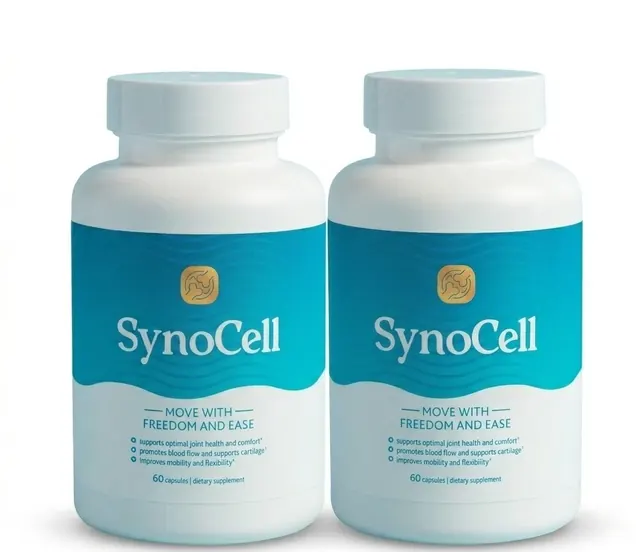
Try SynoCell with a 90-day window2 capsules a day · from $39 a bottle · free standard U.S. shipping
Order nowCan I take SynoCell with blood thinners or other daily medicines?
Only after a pharmacist checks your list. Two ingredients can change drug levels, and a third may add to bleeding risk. A raised INR was reported in a man on warfarin who took quercetin (MSKCC, Quercetin).
| If you take | Ingredient to ask about | Why |
|---|---|---|
| Blood thinners (warfarin and others) | Quercetin, Boswellia | A raised INR was reported with quercetin; Boswellia may add to bleeding risk. (MSKCC, Quercetin) (MSKCC, Boswellia) |
| Cyclosporine, some antibiotics (quinolones) | Quercetin | Listed moderate interactions. (RxList, Quercetin) |
| Seizure drugs (phenytoin, carbamazepine) | Black pepper extract | Piperine raised blood levels in small studies. (Horn and Hansten, 2017) (Ziegenhagen et al., 2021) |
| Heart and blood pressure drugs (propranolol, losartan) | Black pepper, quercetin | Piperine raised propranolol levels; quercetin may interact with losartan. (Ziegenhagen et al., 2021) (MSKCC, Quercetin) |
| Drugs cleared by liver CYP3A4 or CYP2C19 | Quercetin, black pepper | Both can slow how some drugs are broken down. (MSKCC, Quercetin) (Horn and Hansten, 2017) |
| NSAID pain relievers | None known | No listed interaction, but tell your doctor about every supplement you take. (NIH ODS, Dietary Supplements: What You Need to Know) |
In small studies, 15 to 20 mg a day of piperine raised levels of seizure drugs and other medicines (Horn and Hansten, 2017). SynoCell has 5 mg per serving, and no one has tested what that does to a given person's prescriptions. The post on piperine and your medicines goes deeper.
When is joint pain a reason to see a doctor instead?
When it comes on suddenly or with a fever.
A joint that is suddenly hot, red and swollen, or joint pain with fever, can be an infection. Delay can cause lasting damage (MedlinePlus, Septic arthritis).
Also book a visit for pain after a fall, a joint that locks or gives way, or swelling in many joints at once.
What should I try alongside SynoCell, or before it?
Exercise and weight care come first. The 2026 American College of Rheumatology guideline strongly recommends exercise for knee, hip and hand arthritis, and weight loss for knee and hip arthritis in people with overweight (ACR, 2026 OA guideline summary). It does not address ASU or Boswellia at all.
Move daily
Walking, cycling, water exercise or tai chi. Start small and build up.
Then add, if you like
A supplement trial with simple notes and a decision before day 90.
For a plain guide to what the research and guidelines say, read the knee pain guide. If you decide to try it, the how to take SynoCell page covers the daily routine. Order SynoCell
FAQ
Questions about who can take SynoCell
Who should not take SynoCell?
Skip it if you are pregnant, breastfeeding or under 18. Ask a doctor or pharmacist first if you have a soy allergy or kidney disease, or take a blood thinner, seizure, heart or transplant medicine, or any daily prescription. A suddenly hot, swollen joint or joint pain with fever needs urgent care instead (MedlinePlus, Septic arthritis).
Can I take SynoCell if I am allergic to soy?
Talk to an allergist first. SynoCell's largest ingredient, ASU, comes partly from soybean oil, and soy is a common food allergen (MedlinePlus, Food allergy). No allergen statement is published for SynoCell, so bring your bottle to the appointment and let the allergist decide.
Is SynoCell safe for seniors over 70?
Age alone is not a reason to skip it, but older adults often take more medicines, and that is where the risk sits. Have a pharmacist check your list. In one oral hyaluronic acid trial, the benefit over placebo appeared only in people aged 70 or younger (Tashiro et al., 2012).
Can I take SynoCell with kidney disease?
Only with your doctor's approval. Each serving contains 310 mg of quercetin. Very high quercetin doses may harm the kidneys (RxList, Quercetin), and animal data suggest it may worsen existing kidney damage (Andres et al., 2018). Bring the bottle to your kidney doctor or primary care visit before you start.
Is SynoCell for rheumatoid arthritis?
No. The trials behind its ingredients studied osteoarthritis, the wear-related kind. Rheumatoid arthritis is an immune condition that needs a doctor's diagnosis and prescription treatment. If you have RA, keep your prescribed treatment and ask your rheumatologist before adding any supplement at all.
Can I take SynoCell before or after joint surgery?
Check with your surgeon first. Boswellia may add to bleeding risk (MSKCC, Boswellia), and quercetin was linked to a raised INR in a man on warfarin (MSKCC, Quercetin). Most surgeons ask you to stop supplements before an operation. Bring the bottle to your pre-op visit and restart only when your surgical team agrees.
Who wrote this
Written and reviewed by
Plain-language pages built from the label, the brand store and linked medical sources.
Last updated . Read our editorial standards and how we check reviews. This website is run by an authorized U.S. retailer, not by the manufacturer. We earn money when you buy through our order links.
Keep reading
More about SynoCell
How to use
The 2-capsule routine, best time of day, missed doses, travel, storage and spacing from your medicines.
Read more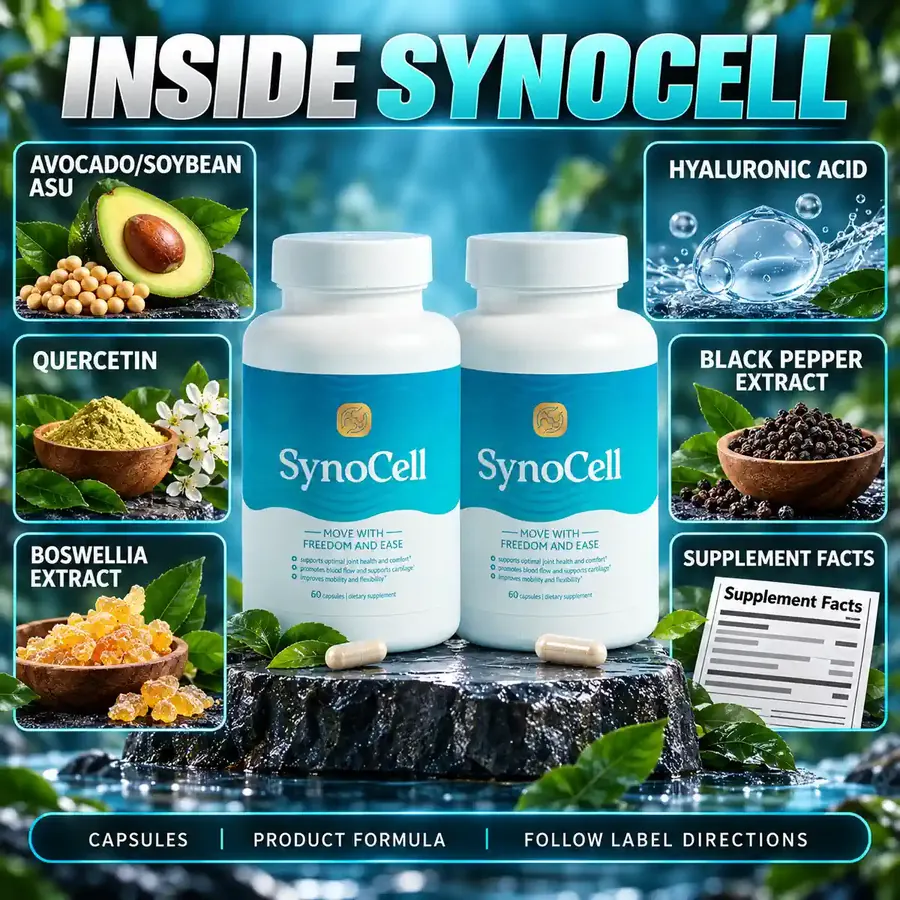
Side effects
Side effects of each SynoCell ingredient, which medicines to check, warning signs and how to report a problem.
Read more
Knee pain guide
Symptoms, red flags, the treatments doctors rank highest, safe pain-relief habits and a weekly knee tracker.
Read moreUSA authorized SynoCell retailer
Ready to try SynoCell?
Pick a pack. Two capsules a day, and the 90-day money-back policy gives you three months to decide.
- Secure checkout
- 90-day money-back policy
- Ships from the U.S. with tracking