Ingredient profile
Avocado/soybean unsaponifiables (ASU) in SynoCell
SynoCell lists 310 mg of ASU per 2 capsules, close to the 300 mg a day used in trials. A Cochrane review found pain about 8.5 points lower on a 0-100 scale, a small benefit. A 3-year hip trial found no slowing of joint damage. ASU is usually well tolerated, but it comes partly from soy.
Written by the SynoCell editorial teamUpdated
What is ASU?
ASU stands for avocado/soybean unsaponifiables. It is the small fraction of avocado and soybean oil that stays behind when the rest of the oil is turned into soap.
That leftover part is fat-soluble. It has been studied as a product for osteoarthritis, and the version used in most trials is Piascledine 300 (WebMD, Avocado soy unsaponifiables). In SynoCell it is a supplement ingredient, not a drug.
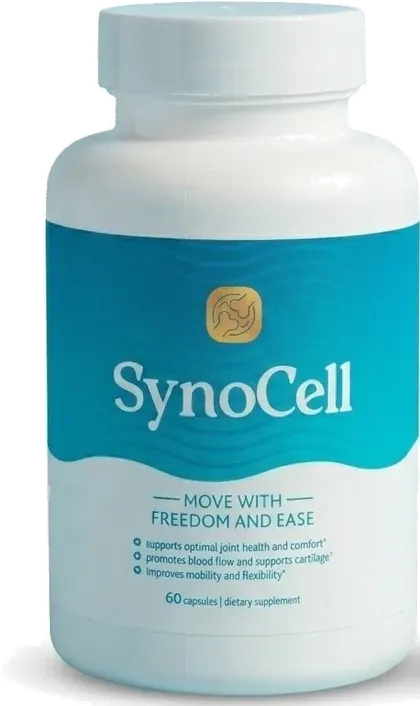
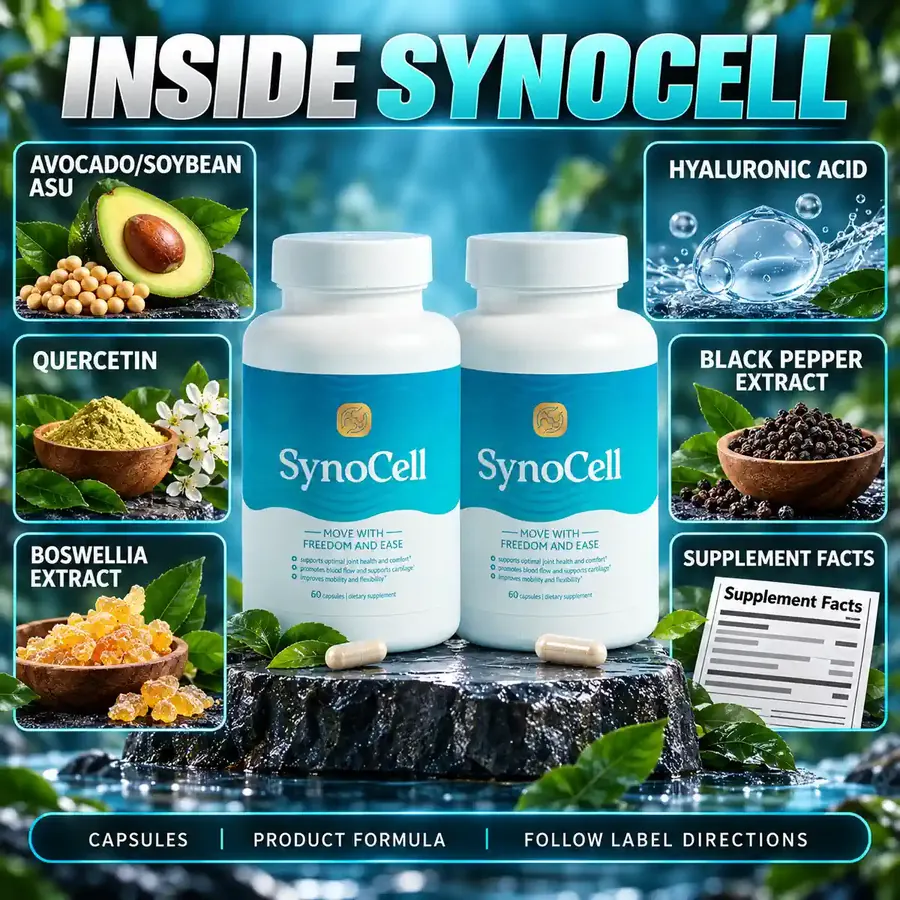
On the SynoCell label it appears first, as Avocado/Soybean Unsaponifiables (ASU), 310 mg per serving.
How much ASU is in SynoCell?
Each 2-capsule serving lists 310 mg. Trials used 300 mg a day, so the label amount is about the same. That makes ASU one of the two SynoCell ingredients dosed near the research, alongside hyaluronic acid.
| Label name | Avocado/Soybean Unsaponifiables (ASU) |
|---|---|
| What it is | Persea americana and Glycine max oil fractions |
| Form | Plant oil extract |
| Amount per 2 capsules | 310 mg |
| Amount used in research | 300 mg a day (trials up to 3 years) |
| Strength of evidence | Small benefit |
| Why it is in the formula | Studied for knee and hip osteoarthritis pain |
| Main caution | Made from soy and avocado: people with soy allergy should ask a clinician first. |
What did the Cochrane review find about ASU?
A small benefit for pain, of questionable clinical importance. The review pooled four trials with 651 people who took ASU 300 mg a day or placebo (Cameron and Chrubasik, 2014).
| Trials pooled (Cochrane) | 4 trials, 651 people (Cameron and Chrubasik, 2014) |
|---|---|
| Daily dose studied | 300 mg (Cameron and Chrubasik, 2014) |
| Pain versus placebo | About 8.5 points lower on a 0-100 scale (Cameron and Chrubasik, 2014) |
| Joint space on X-ray | No significant effect (Cameron and Chrubasik, 2014) |
| ERADIAS hip trial | 399 people, 3 years: joint-space loss, pain and function no different from placebo (Maheu et al., 2014 (ERADIAS)) |
To picture 8.5 points: if your knee pain is a 60 out of 100, a drop to about 51 is the average gain over placebo. Some people may notice that; many will not. The National Center for Complementary and Integrative Health says the improvements may not feel meaningful (NCCIH, Osteoarthritis In Depth).
Does ASU protect cartilage over time?
Not on the main measure. ERADIAS was the long-term test. It followed 399 people with hip osteoarthritis for 3 years on ASU 300 mg a day or placebo (Maheu et al., 2014 (ERADIAS)).
- Average joint-space loss was nearly the same in both groups.
- Fewer people on ASU were classed as progressors (40% versus 50%), but the authors say the clinical meaning is unclear.
- Pain, function and painkiller use did not differ.
So the brand store's talk of restoring cushioning goes beyond the evidence for this ingredient. ASU is a possible comfort aid, not a cartilage repair.
Is 310 mg of ASU enough?
It is in line with the trials. Most studies gave 300 mg once a day, and adults have used that amount for up to 3 years (WebMD, Avocado soy unsaponifiables). More is not known to work better, so there is no reason to double the serving.
One open question: the trials used a specific ASU made by one company. The source and processing of SynoCell's ASU are not published, so the match is in dose, not necessarily in extract.
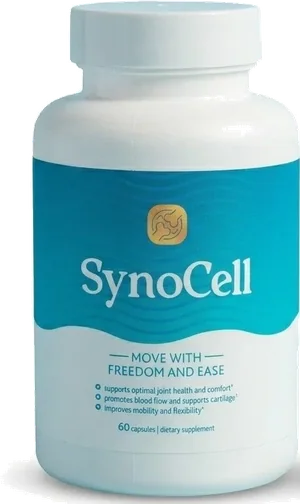
Try SynoCell with a 90-day window2 capsules a day · from $39 a bottle · free standard U.S. shipping
Order nowHow should ASU be taken?
With a meal. ASU is fat-soluble, so food with some fat helps it absorb. SynoCell's serving is 2 capsules; most people find breakfast or dinner easiest to remember. See how to use SynoCell for a simple routine.
Give it time. ASU trials ran for months, not days. Judge it by everyday tasks such as stairs and getting out of a chair, after a few weeks of steady use.
Is ASU safe, and who should avoid it?
ASU is usually well tolerated and is rated possibly safe by mouth (WebMD, Avocado soy unsaponifiables). Long-term safety data are limited, as with most herbal products for osteoarthritis (NCCIH, Osteoarthritis In Depth).
ASU is made partly from soybean oil, and soy is a common food allergen (MedlinePlus, Food allergy). SynoCell publishes no allergen statement. If you have a soy allergy, talk to your allergist before taking it.
There is no reliable safety information, so avoid ASU during pregnancy or while nursing (WebMD, Avocado soy unsaponifiables).
For every ingredient's cautions in one place, see SynoCell side effects.
How does ASU compare with proven osteoarthritis care?
It is far behind. Exercise and weight loss carry strong recommendations from the American College of Rheumatology, which does not address ASU at all (ACR, 2026 OA guideline summary). Each pound lost takes about 4 lb of load off the knee (Messier et al., 2005).
ASU can sit alongside those basics. It should not replace them. Our knee pain guide covers what to try first.
Where can I read about the other ingredients?
ASU is one of five. Use the chips to jump to any profile, or go back to the ingredients overview.
FAQ
Questions about ASU
What is ASU good for?
ASU is studied for knee and hip osteoarthritis pain. A Cochrane review of four trials found pain about 8.5 points lower than placebo on a 0-100 scale, a small benefit of questionable clinical importance. It did not change joint space on X-rays, and a 3-year hip trial found no structural benefit.
Is avocado soybean unsaponifiables safe long term?
Adults have most often used 300 mg a day for up to 3 years, and it is usually well tolerated. It is rated possibly safe by mouth. Long-term safety data are still limited, so tell your doctor you take it, especially if you have other conditions.
Is ASU safe for someone with a soy allergy?
Ask your allergist first. ASU is made partly from soybean oil, and soy is a common food allergen. SynoCell does not publish an allergen statement, so there is no published figure for how much soy protein the capsules contain.
How much ASU should I take a day?
Trials used 300 mg a day. SynoCell lists 310 mg per 2-capsule serving, which matches that. There is no evidence that higher amounts work better, so take the labeled serving and do not double up unless a clinician tells you to.
How long does ASU take to work?
ASU trials ran for months. Expect to wait at least several weeks before judging any change in comfort. If nothing has changed after steady daily use, the small average effect in research may simply not show up for you.
Is SynoCell ASU the same as Piascledine?
Not exactly. Piascledine 300 is the ASU product used in most trials. SynoCell lists a similar amount, 310 mg, but does not publish who makes its ASU or how it is processed, so the extract may differ from the studied one.
Can I take ASU while pregnant?
No. Reliable safety information for pregnancy and breastfeeding is lacking, so ASU should be avoided during both. That applies to SynoCell, which also contains black pepper extract; pregnant women are advised to avoid isolated piperine.
Who wrote this
Written and reviewed by
Plain-language pages built from the label, the brand store and linked medical sources.
Last updated . Read our editorial standards and how we check reviews. This website is run by an authorized U.S. retailer, not by the manufacturer. We earn money when you buy through our order links.
Keep reading
More about SynoCell
Boswellia
200 mg of a 65% boswellic acid extract. Positive small trials, but of different extracts.
Read more
Results timeline
What to expect week by week, a simple tracking log, and when to decide inside the 90-day window.
Read moreKnee pain guide
Symptoms, red flags, the treatments doctors rank highest, safe pain-relief habits and a weekly knee tracker.
Read moreUSA authorized SynoCell retailer
Ready to try SynoCell?
Pick a pack. Two capsules a day, and the 90-day money-back policy gives you three months to decide.
- Secure checkout
- 90-day money-back policy
- Ships from the U.S. with tracking