Ingredient 4 of 5
Hyaluronic acid in SynoCell: what 180 mg by mouth can and cannot do
Each 2-capsule serving of SynoCell lists 180 mg of hyaluronic acid. Small oral studies used 48 to 240 mg a day, so the amount is in range. Results were mixed. One 12-month trial helped only people aged 70 or younger. Swallowed HA is not the same as a joint injection.
Written by the SynoCell editorial teamUpdated
What is hyaluronic acid, and why is it in SynoCell?
Hyaluronic acid (HA) is a sugar-like molecule your body already makes. It is a natural part of the fluid inside your joints, which is why it shows up in joint products.
On the SynoCell label it appears simply as "Hyaluronic acid," 180 mg per 2-capsule serving. The brand store does not say which form or molecular size it uses, and the studies used several different HA products. A review called for trials with a standard dose and molecular weight for exactly this reason (Guadagna et al., 2018).
| Label name | Hyaluronic acid |
|---|---|
| What it is | Sodium hyaluronate (a natural joint-fluid sugar) |
| Form | Oral form of a joint-fluid molecule |
| Amount per 2 capsules | 180 mg |
| Amount used in research | 48-240 mg a day in small oral studies |
| Strength of evidence | Small trials, mixed |
| Why it is in the formula | Studied for knee osteoarthritis symptoms |
| Main caution | Swallowed HA is not the same as HA joint injections; studies are small. |
Is 180 mg of hyaluronic acid close to a research dose?
Yes. Of the five ingredients, HA is one of only two printed near the amounts used in trials. A review of 13 human studies found oral doses from 48 to 240 mg a day, taken for 2 weeks to 12 months (Oe et al., 2016). The longest placebo-controlled trial used 200 mg a day (Tashiro et al., 2012). SynoCell's 180 mg sits inside that range.
A fair dose is a real point in SynoCell's favor. Still, a matching dose does not mean a matching result. No trial has tested the SynoCell combination itself.
What do the oral hyaluronic acid studies actually show?
Most small studies reported less knee pain, but the research has clear limits.
| Source | What was tested | Finding | Main limit |
|---|---|---|---|
| Narrative review (Oe et al., 2016) | 13 human studies, 48-240 mg a day, 2 weeks to 12 months | Most reported less knee pain | Often under 40 people; often mixed with other ingredients; several authors tied to an HA maker |
| 12-month trial (Tashiro et al., 2012) | 60 adults, 200 mg a day or placebo, plus daily thigh exercise | Both groups improved; HA beat placebo only at age 70 or younger | Small; the benefit was in a subgroup |
| Systematic review (Guadagna et al., 2018) | 15 reports, mostly 1-4 months, mild to moderate knee OA | Pain and function scores often improved | Objective measures were modest and inconsistent |
Notice the pattern. Questionnaire scores look better than objective measures, and the minimum dose that works is not settled (Oe et al., 2016).
Why does the age-70 finding matter for you?
It matters because the best long trial helped only part of the group. In that 12-month study, 60 adults with knee osteoarthritis took 200 mg of HA or a placebo each day (Tashiro et al., 2012). Everyone also did daily thigh-strengthening exercise.
Both groups got better. When the researchers split people by age, HA beat placebo only in those aged 70 or younger. In people over 70, the capsule added nothing measurable.
What to take from it
If you are over 70, the strongest oral HA trial gives you little reason to expect a benefit from this ingredient. If you are younger, the result is encouraging but small. In both cases, the exercise did a lot of the work.
Is swallowed hyaluronic acid the same as a knee injection?
No. They share a name, but they reach the joint in very different ways. An injection places HA straight into the knee. A capsule is swallowed and passes through the gut first, so it cannot be assumed to act like a dose placed in the joint.
Oral HA, as in SynoCell
Taken daily by mouth. Studied in small trials at 48 to 240 mg a day (Oe et al., 2016). Mixed results. Sold as a dietary supplement, which FDA does not approve (FDA, Questions and Answers on Dietary Supplements).
Intra-articular HA
Given by a clinician into the knee. A medical procedure with its own trials. The American College of Rheumatology conditionally recommends against it for knee osteoarthritis (ACR, 2026 OA guideline summary).
Do not let a shot's reputation, good or bad, stand in for evidence about pills. For more, read oral hyaluronic acid vs injections.
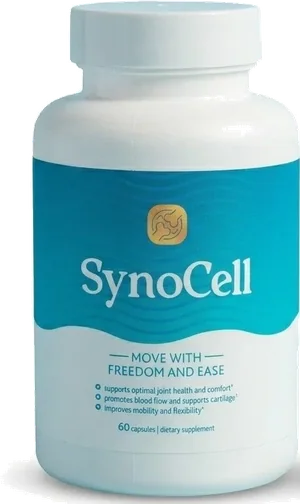
Try SynoCell with a 90-day window2 capsules a day · from $39 a bottle · free standard U.S. shipping
Order nowWhat does the ACR say about hyaluronic acid?
The rheumatology guideline speaks to injections, not capsules. The 2019 version conditionally recommended against HA injections for the knee and strongly against them for the hip (Kolasinski et al., 2020 (ACR/AF 2019 guideline)). The 2026 summary, approved September 8, 2026, kept a conditional recommendation against injected HA (ACR, 2026 OA guideline summary). Neither guideline gives advice on oral HA.
What can you reasonably expect from oral HA?
Expect a modest effect at best, and give it a fair test. Most short studies lasted 1 to 4 months (Guadagna et al., 2018).
- Track something you can count, such as stairs climbed or minutes walked, from day one.
- Keep up the exercise. In the 12-month trial, the exercise group improved even on placebo (Tashiro et al., 2012).
- Decide inside the 90-day money-back window, so a no-result trial costs you less.
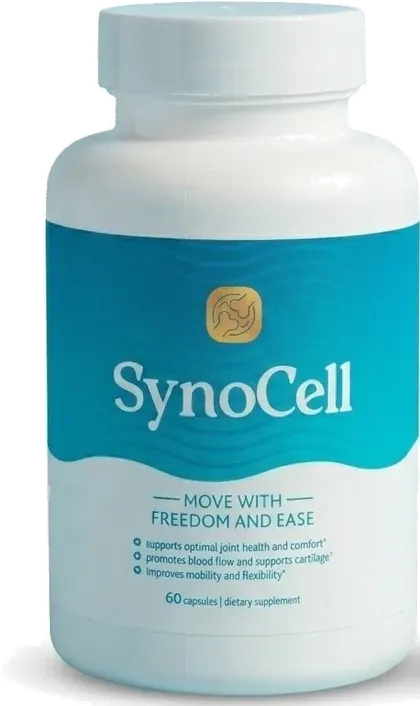
Who should check with a doctor before taking it?
Oral HA has no well-known drug interactions in the sources we use, but its safety data come from small studies. Quercetin and black pepper extract, also in the capsule, can change how some medicines work, so bring the full label to your pharmacist.
Get care fast if a joint suddenly turns hot, red and swollen, or hurts with a fever. That can be a joint infection, which needs urgent treatment, not a supplement (MedlinePlus, Septic arthritis).
If you think SynoCell caused a reaction, stop taking it and report it through FDA's Safety Reporting Portal (FDA, How to Report a Problem with Dietary Supplements). See side effects.
How does hyaluronic acid fit with the other four ingredients?
HA and ASU are the two ingredients printed close to trial doses. Boswellia uses a different extract from the trials, quercetin has no human joint studies, and black pepper extract is there to aid absorption. See all five on the ingredients overview, or move to the next profile below.
FAQ
Oral hyaluronic acid questions
Do hyaluronic acid capsules help knee pain?
It may help a little. Most small studies of 48 to 240 mg a day reported less knee pain, but objective measures were modest and inconsistent. Many studies were under 40 people and some were tied to an HA maker. Treat it as a possible small aid, not a reliable fix. (Oe et al., 2016) (Guadagna et al., 2018)
How much hyaluronic acid is in SynoCell?
Each 2-capsule serving lists 180 mg of hyaluronic acid, per the brand's Supplement Facts. That is close to the 200 mg a day used in a 12-month placebo-controlled trial, and inside the 48 to 240 mg range seen in smaller studies. The brand does not publish the form or molecular size. (SynoCell, product page) (Tashiro et al., 2012)
Is oral hyaluronic acid as good as a hyaluronic acid injection?
They cannot be compared directly. An injection goes into the knee; a capsule goes through the gut first. Each has its own studies. The ACR conditionally recommends against knee injections, and it makes no recommendation about oral HA. Ask your doctor which, if either, suits your knee. (ACR, 2026 OA guideline summary)
Does hyaluronic acid work for people over 70?
The best long trial says probably not. In a 12-month study of 200 mg a day with daily exercise, HA beat placebo only in people aged 70 or younger. Older adults improved, but no more than with placebo plus the same exercise. (Tashiro et al., 2012)
How long should I take hyaluronic acid pills to see results?
No set timeline exists. Studies ran from 2 weeks to 12 months, and most short ones lasted 1 to 4 months. A fair test is a steady 2 capsules a day for at least a couple of months, while you track walks, stairs and getting up from a chair. (Oe et al., 2016) (Guadagna et al., 2018)
Who wrote this
Written and reviewed by
Plain-language pages built from the label, the brand store and linked medical sources.
Last updated . Read our editorial standards and how we check reviews. This website is run by an authorized U.S. retailer, not by the manufacturer. We earn money when you buy through our order links.
Keep reading
More about SynoCell

Ingredients
All five ingredients, the amount in each serving, and how much human evidence backs each one.
Read more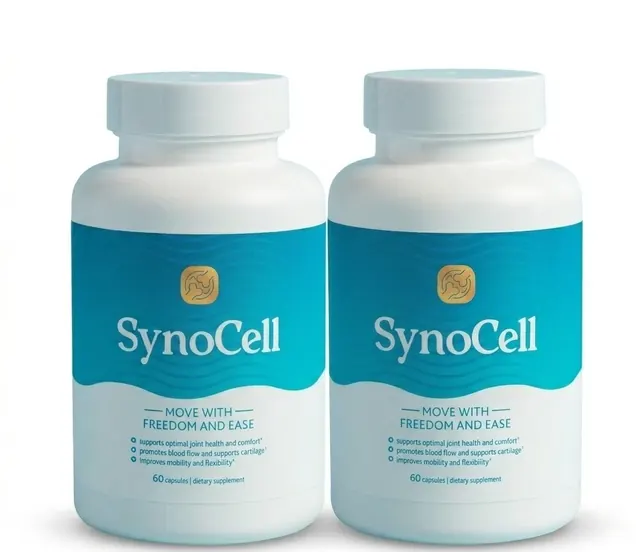
Oral HA vs injections
Capsules vs knee shots: doses, the age-70 trial result and what the ACR says about injected HA.
Read moreSupplement Facts
Every line of the SynoCell label, what is missing from it, and how to read any Supplement Facts panel.
Read moreUSA authorized SynoCell retailer
Ready to try SynoCell?
Pick a pack. Two capsules a day, and the 90-day money-back policy gives you three months to decide.
- Secure checkout
- 90-day money-back policy
- Ships from the U.S. with tracking