Checklist · Safety and side effects
Is SynoCell Safe? 7 Checks Before Your First Capsule
Most reports about SynoCell's ingredients describe no problems or mild stomach upset. The bigger risks are medicine interactions and a few groups who should skip it or ask first: pregnancy, nursing, under 18, soy allergy, kidney disease. No trial has tested the combination itself. Run your plan past a doctor or pharmacist before the first capsule.
Written by the SynoCell editorial teamMedically reviewed by Dr. Nehad Soloman, MD, FACR, PhysicianReviewed · Updated · 8 min read
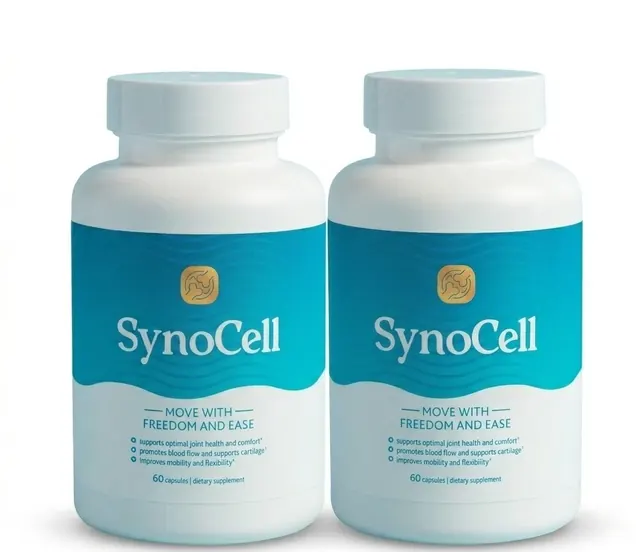
Key facts
- No trial has tested the SynoCell combination, so its safety profile comes from studies of each ingredient.
- Mild stomach upset is the most common complaint linked to the ingredients, mainly Boswellia.
- Skip it if you are pregnant, nursing or under 18. It is sold for adults.
- Ask first if you have a soy allergy or kidney disease, or take blood thinners, cyclosporine, seizure medicines, heart or blood pressure drugs or any daily prescription.
- Two ingredients, quercetin and black pepper extract, can shift the effect of some medicines. Boswellia may add to bleeding risk.
- A joint that turns hot, red and swollen, or hurts alongside a fever, is a case for urgent care and not for capsules.
- SynoCell carries no FDA approval and is not a drug.
Check 1: Are you 18 or older, and not pregnant or nursing?
SynoCell is for adults only. The studies behind its ingredients enrolled adults, and a young person with ongoing joint pain should see a doctor instead.
Pregnancy and nursing are a clear stop. There is no reliable safety information for ASU in pregnancy or breastfeeding, so the usual advice is to avoid it (WebMD, Avocado soy unsaponifiables). Germany's risk agency also advises pregnant women to avoid isolated piperine, the active part of black pepper extract (Ziegenhagen et al., 2021). Pepper on food is a different matter. The concern is a concentrated extract taken every day.
If you are unsure which group you fall in, ask your doctor. It takes a minute and settles the question.
Check 2: Do you have a soy allergy?
ASU stands for avocado/soybean unsaponifiables. It is a small fraction of avocado and soybean oils. Soy is a common food allergen, and severe reactions can start within two hours (MedlinePlus, Food allergy).
The brand store publishes no allergen statement and no list of other ingredients. No figure is given for the soy protein in the capsules. If you have a soy allergy, talk to an allergist first and bring the bottle.
Boswellia also has rare reports of allergic skin reactions (MSKCC, Boswellia).
Check 3: Do you have kidney disease?
Each serving has 310 mg of quercetin. At usual supplement doses, adverse effects in human studies were rare and mild (Andres et al., 2018). Very high doses might harm the kidneys (RxList, Quercetin), and animal data suggest quercetin may worsen damage that already exists.
We found no report that ties SynoCell itself to kidney harm. Still, if your kidney function is reduced, show your doctor the label before you start. It prints every amount, so the conversation is short.
Check 4: What can each ingredient cause?
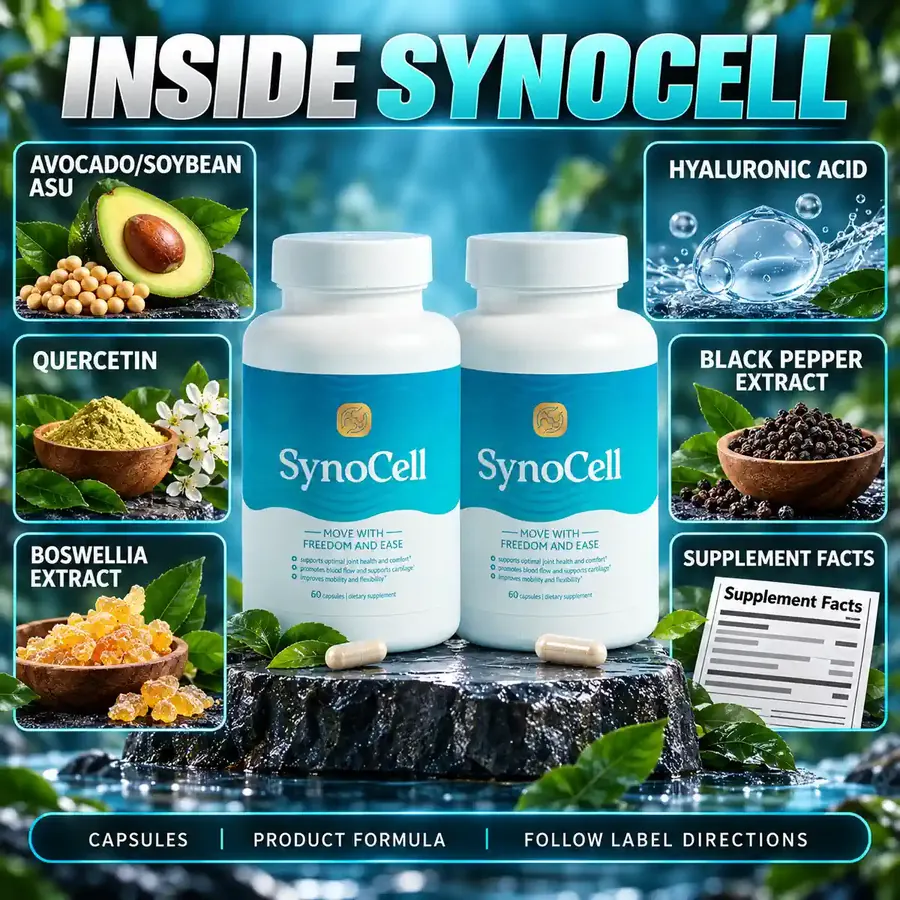
Here is each ingredient with its reported side effects and its main caution. SynoCell's amounts are per 2 capsules.
| Ingredient | Reported side effects | Main caution |
|---|---|---|
| ASU, 310 mg | Usually well tolerated; used daily for up to 3 years | Made partly from soy; avoid in pregnancy and nursing |
| Quercetin, 310 mg | Rare and mild in human studies | Very high doses may harm kidneys; several drug interactions |
| Boswellia extract, 200 mg | Mild stomach upset, nausea, diarrhea; rare skin rash, mild constipation | May add to bleeding risk with blood thinners |
| Hyaluronic acid, 180 mg | Not well described; oral studies were small and short | Little long-term data |
| Black pepper extract, 5 mg | None reported at 20 mg in the classic absorption study | Can raise blood levels of some medicines |
Sources: (WebMD, Avocado soy unsaponifiables)(Andres et al., 2018)(Sengupta et al., 2008)(Guadagna et al., 2018)(Shoba et al., 1998).
If you pass the checks and your doctor agrees, the order page shows the price, the total and the 90-day guarantee before you pay.From $39 a bottle in the 6-pack. Free standard shipping in the mainland U.S. We earn money when you buy through our order links.
See today's price and guaranteeCheck 5: Could it cause diarrhea or an upset stomach?
It can, but usually mildly, and mostly from Boswellia. Memorial Sloan Kettering lists mild constipation and a rare skin rash (MSKCC, Boswellia). In the 75-person 5-Loxin trial, people on placebo reported diarrhea, nausea and belly pain about as often as people on the extract (Sengupta et al., 2008).
Two habits help. Take the capsules in the middle of a meal with water, and stop if the upset lasts more than a few days. If you have bowel disease or a sensitive stomach, tell your doctor before you start. No side-effect data exist for the formula itself.
Check 6: Do your medicines need a pharmacist's view first?
Ask first if you take any of these. The reason is in the ingredients, not in a warning on the bottle.
- Blood thinners such as warfarin. A man on warfarin who took quercetin had a raised INR (MSKCC, Quercetin), and Boswellia may add to bleeding risk.
- Cyclosporine and some antibiotics (quinolones). Quercetin has listed moderate interactions (RxList, Quercetin).
- Seizure medicines such as phenytoin and carbamazepine. At 15-20 mg a day, piperine raised their blood levels in small studies (Horn and Hansten, 2017).
- Heart and blood pressure drugs such as propranolol and losartan.
- Any daily prescription. Your doctor should hear about every supplement you use (NIH ODS, Dietary Supplements: What You Need to Know).
SynoCell has 5 mg of piperine, which is lower than the study doses, and nobody has tested what that does to a given medicine. See our post on piperine and your medicines for the details.
Check 7: Do you know the warning signs, and who to call?
Know them before you start.
Call 911 or go to an emergency room
A swollen throat, tongue or lips, trouble breathing, widespread hives, or a faint after a dose. Severe allergic reactions can be life threatening (MedlinePlus, Food allergy).
Stop and call your doctor the same day for unusual bruising, nosebleeds, bleeding gums or dark stools, especially on a blood thinner. Also call for new drowsiness or unsteadiness on seizure medicines, or less urine than usual or leg swelling if you have kidney problems.
A joint that suddenly turns hot, red and swollen, or joint pain with fever, may be an infection and needs urgent care (MedlinePlus, Septic arthritis).
To report a reaction, stop the product, get care, keep the bottle, then file a report through FDA's Safety Reporting Portal (FDA, How to Report a Problem with Dietary Supplements). You can then call the order desk at +1 (302) 200-3480 so the seller has a record too.
So is SynoCell safe and effective?
Safe enough for many healthy adults is a fair reading of the ingredient studies. Effective is a harder word. ASU and Boswellia showed small benefits in trials, hyaluronic acid was mixed, and quercetin has no human joint trials. No trial has tested SynoCell itself.
| Question | What the sources show |
|---|---|
| Tested as a combination? | No trial of SynoCell itself |
| Safety data | From each ingredient alone, mostly short studies |
| Size of benefit | Small in ASU trials: about 8.5 points on a 0-100 pain scale |
| Guarantee | 90-day money-back policy, with conditions |
| Serving | 2 capsules once a day, 30 servings per bottle |
The 2026 ACR guideline summary strongly recommends exercise, weight loss if you are overweight, and NSAID creams or pills, and it does not address ASU or Boswellia (ACR, 2026 OA guideline summary).
FAQ
Frequently asked questions
Is SynoCell safe to take?
For many healthy adults the ingredients look well tolerated, with mild stomach upset the main complaint. It is not safe for everyone: skip it if you are pregnant, nursing or under 18, and ask first if you have a soy allergy, kidney disease or take daily medicines. No trial has tested the combination.
Which side effects can SynoCell cause?
Mild stomach upset, such as nausea or loose stools, is the complaint most often tied to its ingredients, mostly Boswellia (Sengupta et al., 2008). Rare skin rashes have been reported (MSKCC, Boswellia). The bigger issues are medicine interactions and cautions for soy allergy, kidney disease and pregnancy.
Does SynoCell cause diarrhea?
It can in some people. Diarrhea, nausea and belly pain were reported with the Boswellia extract in a 90-day trial, but they showed up about as often on placebo. Take it with a meal, and stop and call your doctor if it lasts more than a few days.
Is SynoCell okay with warfarin or other blood thinners?
Only with your prescriber's approval. Quercetin was linked to a raised INR in a man on warfarin, and Boswellia may increase bleeding risk. If your doctor agrees, expect an extra blood test and watch for unusual bruising, nosebleeds or dark stools.
Can SynoCell cause an allergic reaction?
It can in some people. ASU comes partly from soybean oil, and soy is a common allergen. Boswellia has rare reports of allergic skin reactions. Face or throat swelling, or trouble breathing, means emergency care right away.
Is SynoCell FDA approved?
No. FDA does not approve dietary supplements, so no supplement is FDA approved (FDA, Approval myths). The label carries the standard disclaimer that FDA has not evaluated the statements.
Our view
The honest answer is that SynoCell looks reasonably safe for healthy adults who take few medicines, and carries real cautions for a handful of groups. The numbers are printed, the guidance is clear and the main risks are known.
What is missing is a trial of the combination. That is why the checks above matter. Run them, bring the label to your doctor or pharmacist if any of them gives you pause, and stop at the first sign of trouble.
SynoCell is not a pain reliever and not a treatment for arthritis. If you decide to try it, treat it as an add-on to exercise and weight care, with a clear date to decide.
Last updated
If your checks come out clear, the order page shows today's price, the total and the 90-day guarantee.From $39 a bottle in the 6-pack. Free standard shipping in the mainland U.S. We earn money when you buy through our order links.
See today's price and guaranteeWho wrote this
Written and reviewed by
Plain-language pages built from the label, the brand store and linked medical sources.
Last updated . Read our editorial standards and how we check reviews. This website is run by an authorized U.S. retailer, not by the manufacturer. We earn money when you buy through our order links.
USA authorized SynoCell retailer
Ready to try SynoCell?
Pick a pack. Two capsules a day, and the 90-day money-back policy gives you three months to decide.
- Secure checkout
- 90-day money-back policy
- Ships from the U.S. with tracking